Why Handmade Art Has Lasting Value in a Digital World
Updated: Apr 21
The art world has changed due to the rise of images created using AI.
All kinds of images can be produced at lightning speed and can be found everywhere online.
Many images look attractive at first glance.
However, it is often difficult to distinguish whether it is AI art or art handmade by the artist.
But there is also a growing need among art lovers and collectors for something that goes against this. They specifically want original art, handmade art by an artist, with human input and lasting value.
For people considering purchasing a work of art, the question is becoming increasingly relevant: what makes a work of art truly valuable? Is it the image itself, or rather everything behind it?
This blog discusses the completely different position that unique handmade art occupies relative to images created digitally or with AI.
The Power of Tangibility in a Digital Age
The tangibility of art is one of the most underestimated aspects of art.
It is important for people to be able to touch art, to literally feel it. To be able to see up close how a work of art is constructed. The structure, the layers, and all the small details.
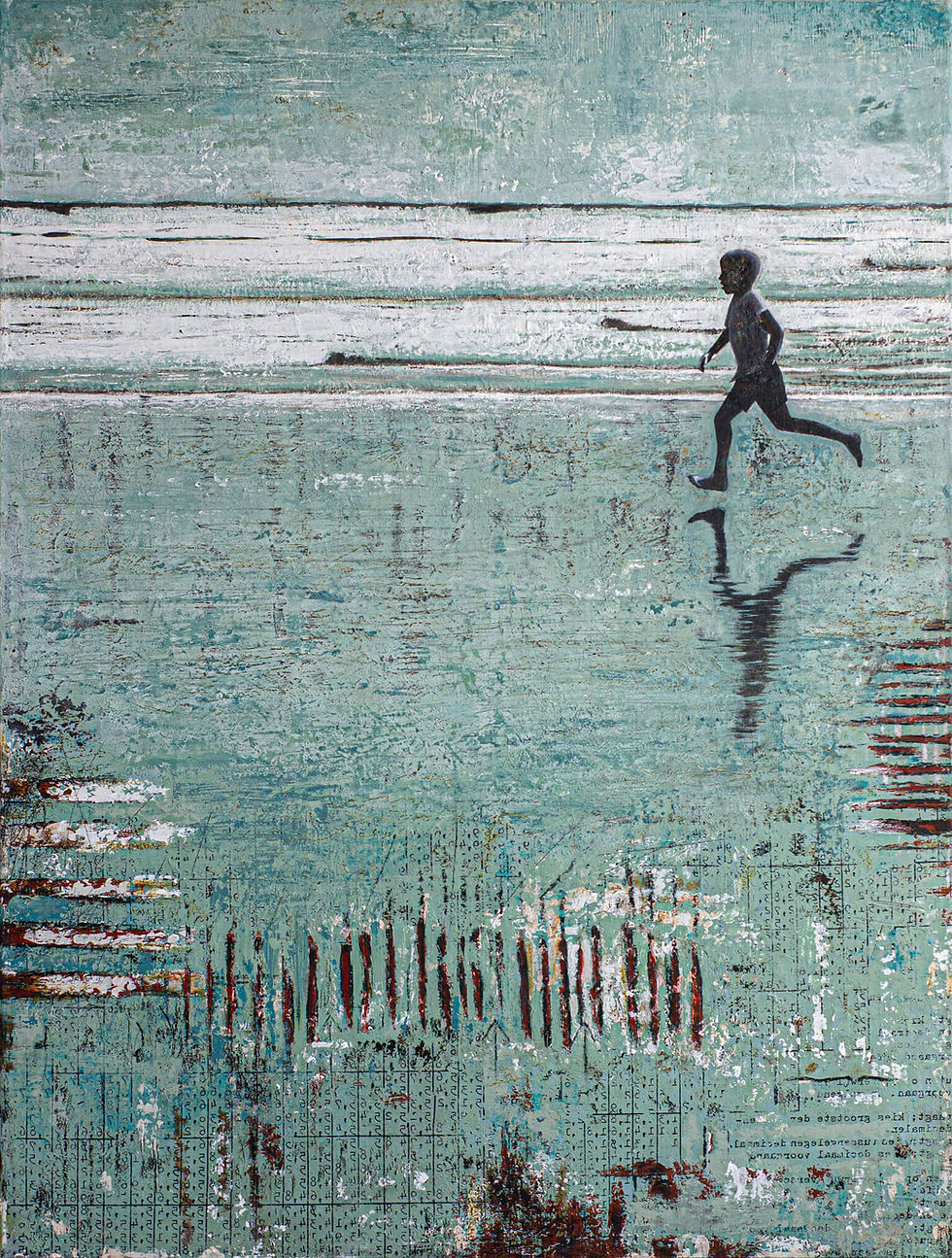
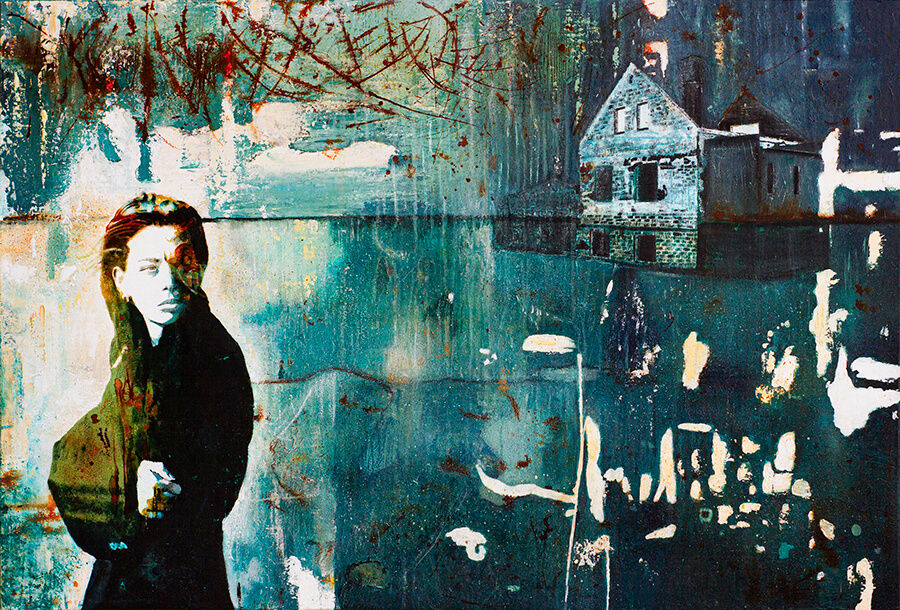
A painting lives not only through what you see, but also through what you feel and experience when you stand in front of it. The materials, the thickness of the paint, the visible traces of the creative process. Together, they form a physical reality that cannot be reproduced on a screen.
Tangibility provides:
Connection with a work of art.
Interaction with light and the environment
A sensory experience that goes beyond mere sight.
This plays a very important role in original art.
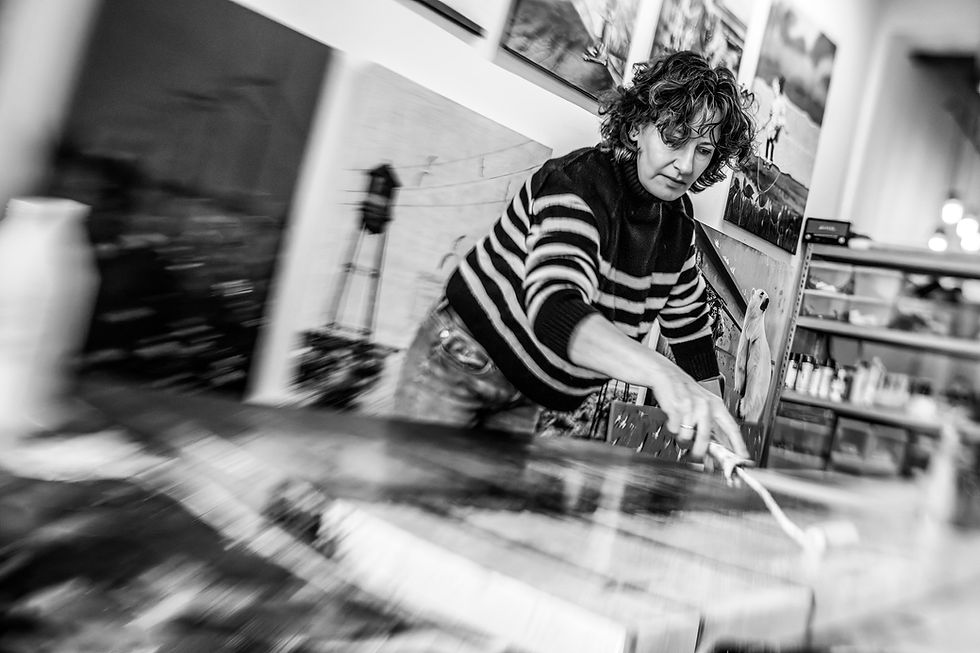
When people visit my studio / gallery at Strijp-S, I always let them touch a painting.
Then they are surprised by the details and the structure that they can see and feel up close. An artwork changes subtly depending on the time of day, the angle of the light, and the distance from the viewer. That makes every moment of contact unique.
Materials, structure, and layers: where Handmade art distinguishes itself
Digital images can be beautiful and certainly come across as convincing.
But the power of physical, handmade art lies in the construction of the painting. Through the use of various materials (Mixed Media) or different painting techniques, layers and structures are created that are not possible with digital images.
In a Mixed Media painting, depth is created by:
Layers of paint that overlap.
Differences in surface due to a combination of rough or smooth layers.
The use of various materials that are mixed together, such as paper, paint, objects, and fabric.
A combination of different techniques, such as the use of watercolor, a palette knife, paint roller, or utility knife.
The depth created in handmade artworks through this is not only visual but also physical. The work literally has a structure, a history, and a series of choices that remain visible.
That makes every work unique. Not only in image, but also in material.
The Story Behind the Artwork
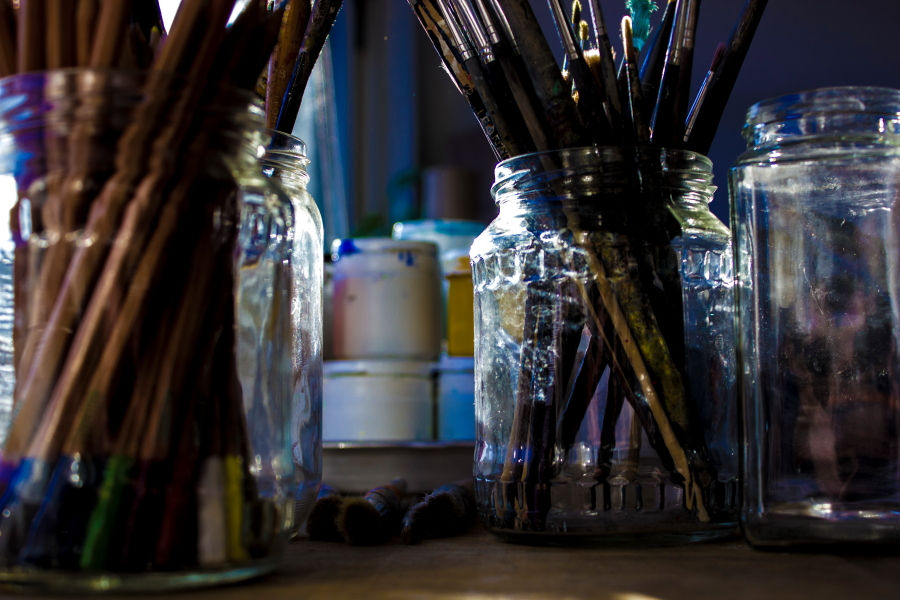
Every form of original handmade art carries a story with it. Perhaps not immediately in the image itself, but certainly *behind* the image, through the artist's intentions and choices.
That story manifests itself in:
The artist's choices regarding materials
The artist's process
Moments of doubt and change
The context in which the work was created
For art collectors, this is particularly important. They do not just buy an image, but also the entire story and journey behind a painting. The story makes the difference between decoration and meaningful art.
In an artwork built with love, attention, and labor, you can see the time an artist needed. That time translates into value.
The Value of Labor and Time
An essential difference between creating AI images and original handmade art lies in the labor factor.
A handmade painting never comes into being in a single moment.
A painting does not come into being in a single moment.
Creating a work of art is the result of:
Conceiving a new work
Making preparations to realize a work
Acquiring any special materials
Physical actions
Experimenting
Sometimes starting over
Doubt
In short; hours, days, weeks of work
You can see that time reflected in the final result. Not literally, but palpable. It is clearly visible that an artist has put a lot of time and labor into creating a painting.
For art collectors, this means investing in something that is not only unique but also cannot be reproduced in the same way.

Direct meeting with the artist and the power of a studio visit
Another important difference between handmade art and digital or AI art is not only the possibility of direct physical contact with an artwork. But at least as important: contact with the artist themselves.
When purchasing original handmade art, there is often the opportunity to meet the maker personally.
Then there is the chance to hear the story behind the work.
You can ask questions about the entire creative process.
This personal contact enhances the experience of an artwork and strengthens the emotional and substantive value of the work. As a result, purchasing a painting becomes not only a visual choice but also a conscious investment in a story and a person behind the work.
Online art platforms, where digital images are often offered as prints alongside handmade art, are primarily focused on wide reach and convenience.
However, a physical studio visit offers a deeper and more complete perspective. At the artist's place, you see the actual scale of an artwork, experience the materials used, and discover the layering, structure, and details that are often lost online.
The impact of an original painting in a space, for example a 120 x 120 cm work, is completely different from the display of a digital image on a screen. The work gains more presence, both literally and figuratively, making the experience more direct, intense, and convincing.
The combination of personal contact with the artist and physically experiencing the work in a studio creates a complete art experience that simply cannot be matched online.

Investing in depth and meaning for both collector and artist
Digitally created art often evokes wonder. People wonder how it was made because it often looks very unique.
Despite the appeal of visually stunning images, a shift is underway.
Art lovers and art collectors are increasingly consciously choosing works with clearly visible labor, layering, and a strong narrative.
Authenticity, meaning, and lasting value have become determining factors in the purchasing process. People are reflecting more on the creation process of an artwork.
At the same time, this also plays out on the artist's side. Creating original handmade art is not just about making an image, but about a process, the use of materials, and a personal story.
In my paintings, depth is created by combining different materials (mixed media), working in layers, and consciously allowing for imperfection and texture. This process requires time, labor, and a clear artistic vision.
Choices, experimentation, failures, and patience are part of this process. This way of working ensures that the artwork is not dependent on trends or rapid consumption, but rather builds value through authenticity and craftsmanship.
For a collector, a handmade painting is much more than just a visual addition to a space.
It is an investment in a story that continues to evolve. The layering in the work, both physically and thematically, ensures that you keep looking at it and discover new details time and again.
What is visible today can take on a different meaning over the years, and it is precisely this that makes original art sustainably interesting, both emotionally and in value.

Why Handmade Art Remains Future-Proof
Despite technological developments that can produce fantastic digital images, the demand for real art persists.
And this demand is even growing. People are increasingly asking whether an artwork was created digitally or by hand.
This is because:
• people retain a need for handmade, physical experiences
• authenticity is becoming scarce in a digital world
• art expresses a form of identity and personality
A painting on the wall is not just an image, but a statement. It says something about the owner, about taste, vision, and appreciation for quality.
Are you considering purchasing a piece of art?
Are you curious about my work, my working methods, or the possibilities of direct purchase?
You are always welcome to:
view my current collection
discover the story behind a piece of art
contact me with questions
or schedule a studio visit
Together, we can discuss what suits your interior, without pressure or obligation.
You buy art with care.
That care begins with a conversation.
Visit my Studio!
You are always welcome to visit my studio gallery at
Strijp-S in Eindhoven, The Netherlands
Or take a look at my online portfolio.
Please contact me with any questions or requests you may have!
Please contact me if you have any questions. I can help you choose or create a piece of art that fits your interior!